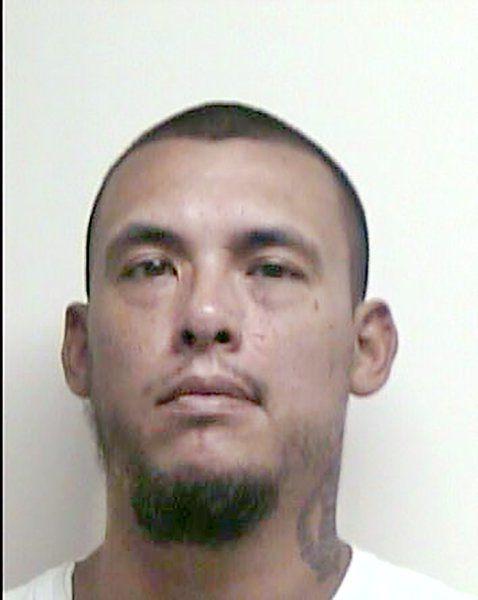
The police began searching for Trent, whom they suspected of murder. Days later, they found him hanging from a tree in the Wichita Mountain Wildlife Refuge, where he’d killed himself. Law enforcement believed he’d beaten the boy while Hogue was away at work that night. At the scene of his suicide, they found the words “Rebecca is Innocent” carved into a tree.
Everyone who investigated the case agreed that Hogue did not kill her son or participate in the abuse. She hadn’t even been home at the time of the violence. But in the ultimate act of victim-blaming against a grieving mother, the state of Oklahoma decided to punish her for her son’s death: In November, Hogue was convicted of first-degree murder, even though she never laid a hand on the boy.
But attorneys who study these cases say there’s no evidence that these types of laws actually keep kids safe. Instead, they often lead to the incarceration of moms who never committed any violence and were unable—often for reasons outside their control—to get help for their children. Some of these women were themselves victims of domestic violence.
Theoretically, both mothers and fathers can face charges under these statutes, but attorneys who study these cases say that it’s usually women who are taken to court, often because of unrealistic expectations that mothers should be able to protect their children no matter what. In an interview with the
Norman Transcript, which has
Hogue’s case since the beginning, Oklahoma County public defender Ryan Sullivan described the law as “draconian” and “sexist.”
Cleveland County District Attorney Greg Mashburn, whose office prosecuted Hogue, put it this way: “If you enable the abuse of a child, basically you failed to protect that child,” he told the
Transcript. “You are just as guilty as the actual person” who committed the abuse.
Over the last decade, hundreds of mothers have been prosecuted for similar charges in Oklahoma, according to a
Mother Jones analysis of court records. Some of them have received
than the men who actually committed the abuse.
Some of the investigators felt sympathy for Hogue. In fact, Norman Police Department Detective Sean Judy, who led the investigation, stated before the trial that he did not believe she committed a crime. In a recorded conversation, he and another detective referred to her arrest as a “bullshit case.” They did not want to press charges..
Fischer, the attorney in Illinois, believes some prosecutors go hard against women in these cases because of political pressure. The thinking is, she says, “‘Don’t let people who let their children be killed get away.'” Prosecutors who are up for reelection don’t want to be judged for “looking like they are excusing child abuse,” adds Colby Lenz, who leads the advocacy group Survived & Punished in California, which tries to help women experiencing domestic violence.
During the trial, jurors were not allowed to see some evidence that might have helped Hogue. Judge Michael Tupper prevented them from hearing the recording of Detective Judy expressing skepticism about her guilt. The judge also prevented them from seeing the image of the tree carving at the Wichita Mountain Wildlife Refuge, the one that said “Rebecca is Innocent,” a message that the judge said would have constituted hearsay from Trent. And the judge prevented a domestic violence expert from testifying on Hogue’s behalf.
After the jury convicted Hogue, they recommended life in prison with the possibility of parole. But the judge won’t decide her sentence until Friday. After Hogue heard the jury’s recommendation, Hogue’s attorney Andrew Casey apologized to her as she was handcuffed and taken back to the jail, where officers put her in solitary confinement for several weeks because of the high-profile nature of her case. “We were utterly floored by the jury’s decision,” says Stacey Wright, an activist in Norman who began following failure-to-protect cases after starting a group that helps women who experienced sexual assault. “She shouldn’t have been charged. It’s absolutely unconscionable.”
In January, investigators for the Oklahoma Department of Corrections reviewed Hogue’s case and sent the court a sentencing recommendation that diverged from the jury’s. As part a report they file before a judge decides a punishment for a defendant, the investigators said they did not believe Hogue should spend time in prison because she was not a threat to the community. “Hogue appears to be struggling mentally and…it appears Hogue would benefit more from a longterm residential treatment facility to target her mental health, grief and trauma,” the report stated. It also suggested that she should serve probation after her release from a treatment facility. The investigators described Hogue as “remorseful” and said she “appears to be emotionally distraught” and “to be going through grief.”
But ultimately, it will be up to the judge to decide her sentence on Friday. The possibility remains that she will be sent to prison for life. “It’s just been hard for her to hold on to any hope,” says Wright, the activist, who talks to Hogue regularly.
Hogue keeps photos of her son in the Bible she sleeps beside in jail every night.