- Reaction score
- 5,453
- Location
- Los Santos
*For those who are interested. Feel free to add your own stuff if you want.
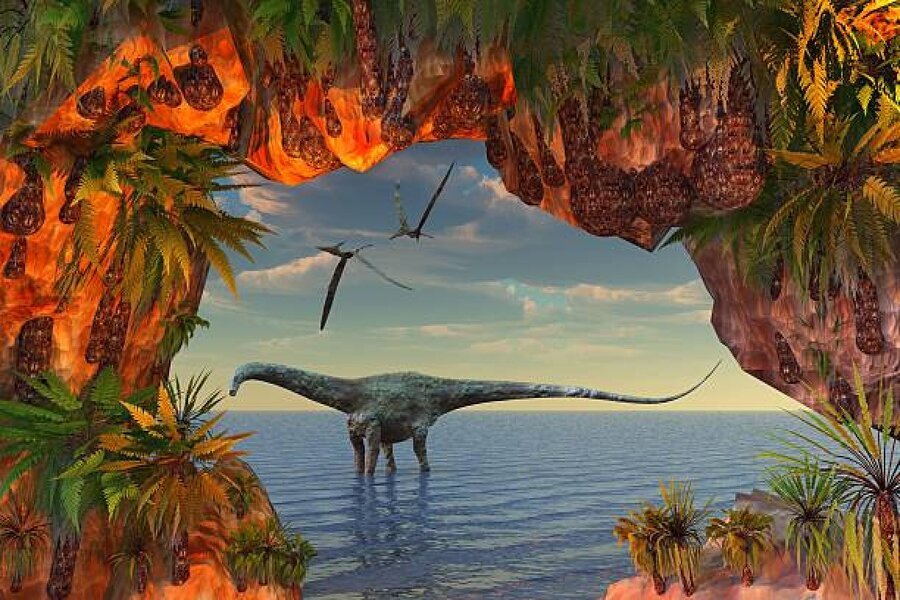
A herd of dinosaurs larger than highway trucks migrate across what’s now western North America. The group protects their babies from predators like Allosaurus by hiding the youngsters in the center of the herd. (And speaking of big babies: Apatosaurus eggs were about a foot long!) The 70-foot-long dinosaurs walk in search of tasty forest leaves.
A member of the sauropod group—four-legged plant-eaters with long necks and long tails—Apatosaurus lived alongside other giant herbivores like Diplodocus, Barosaurus, Brachiosaurus, and Camarasaurus during the late Jurassic Period, between about 156 million and 151 million years ago. How did all of these dinosaurs share the same food sources? Experts think perhaps different sizes of dinosaurs ate at different levels of the forest trees.
This Dino is named for the Greek words meaning “deceptive lizard” because at the time, scientists thought that some of its bones looked like those of mosasaurs, aquatic reptiles related to snakes and lizards that aren’t actually dinosaurs. Apatosaurus is a lot like its close relative Brontosaurus (which means “thunder lizard” in Greek). Until 2015, these Dinos were thought to be so similar that scientists wanted to give them the same name. (Apatosaurus was the winner because it was named first.) But today scientists think that Brontosaurus is its own type of dinosaur.
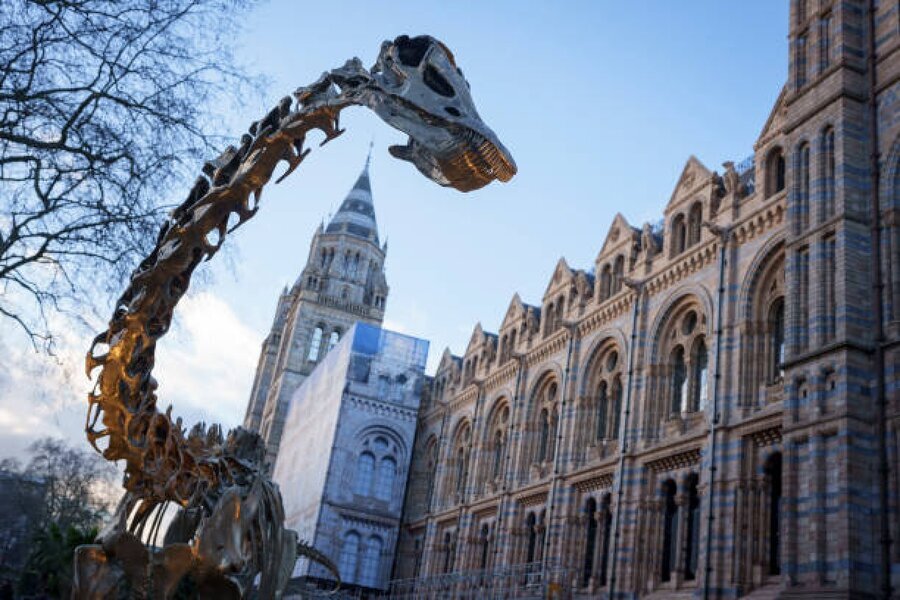
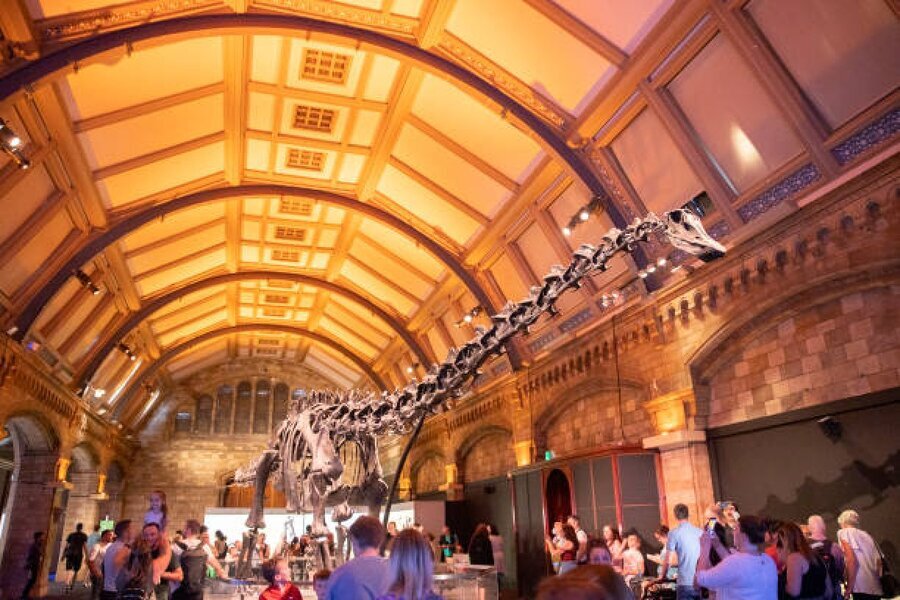
Another mistake? An Apatosaurus skeleton was displayed with the wrong head for many years. The fossilized skull of a Camarasaurus was found in the same site and mistakenly put atop the body of Apatosaurus at Carnegie Museum of Natural History in Pennsylvania from 1934 to 1979. Whoops!
APATOSAURUS
A herd of dinosaurs larger than highway trucks migrate across what’s now western North America. The group protects their babies from predators like Allosaurus by hiding the youngsters in the center of the herd. (And speaking of big babies: Apatosaurus eggs were about a foot long!) The 70-foot-long dinosaurs walk in search of tasty forest leaves.
A member of the sauropod group—four-legged plant-eaters with long necks and long tails—Apatosaurus lived alongside other giant herbivores like Diplodocus, Barosaurus, Brachiosaurus, and Camarasaurus during the late Jurassic Period, between about 156 million and 151 million years ago. How did all of these dinosaurs share the same food sources? Experts think perhaps different sizes of dinosaurs ate at different levels of the forest trees.
This Dino is named for the Greek words meaning “deceptive lizard” because at the time, scientists thought that some of its bones looked like those of mosasaurs, aquatic reptiles related to snakes and lizards that aren’t actually dinosaurs. Apatosaurus is a lot like its close relative Brontosaurus (which means “thunder lizard” in Greek). Until 2015, these Dinos were thought to be so similar that scientists wanted to give them the same name. (Apatosaurus was the winner because it was named first.) But today scientists think that Brontosaurus is its own type of dinosaur.
Another mistake? An Apatosaurus skeleton was displayed with the wrong head for many years. The fossilized skull of a Camarasaurus was found in the same site and mistakenly put atop the body of Apatosaurus at Carnegie Museum of Natural History in Pennsylvania from 1934 to 1979. Whoops!